Every project manager should begin their career journey with a map, which is not about places. But it is about priorities, principles, and, most importantly, right practices. As the proverb wisely says, “If you don’t know where you are going, any road will take you there.” Therefore, this guide is articulated to ensure that you know exactly where you are going. With this, you can progress from structured learning to professional excellence.
However, it is not a checklist; it’s a progressive journey. That means it is crafted to aid you in thinking, acting, and leading like a globally respected project professional.
Jump ahead to
Foundational Concepts – Building the Right Mindset
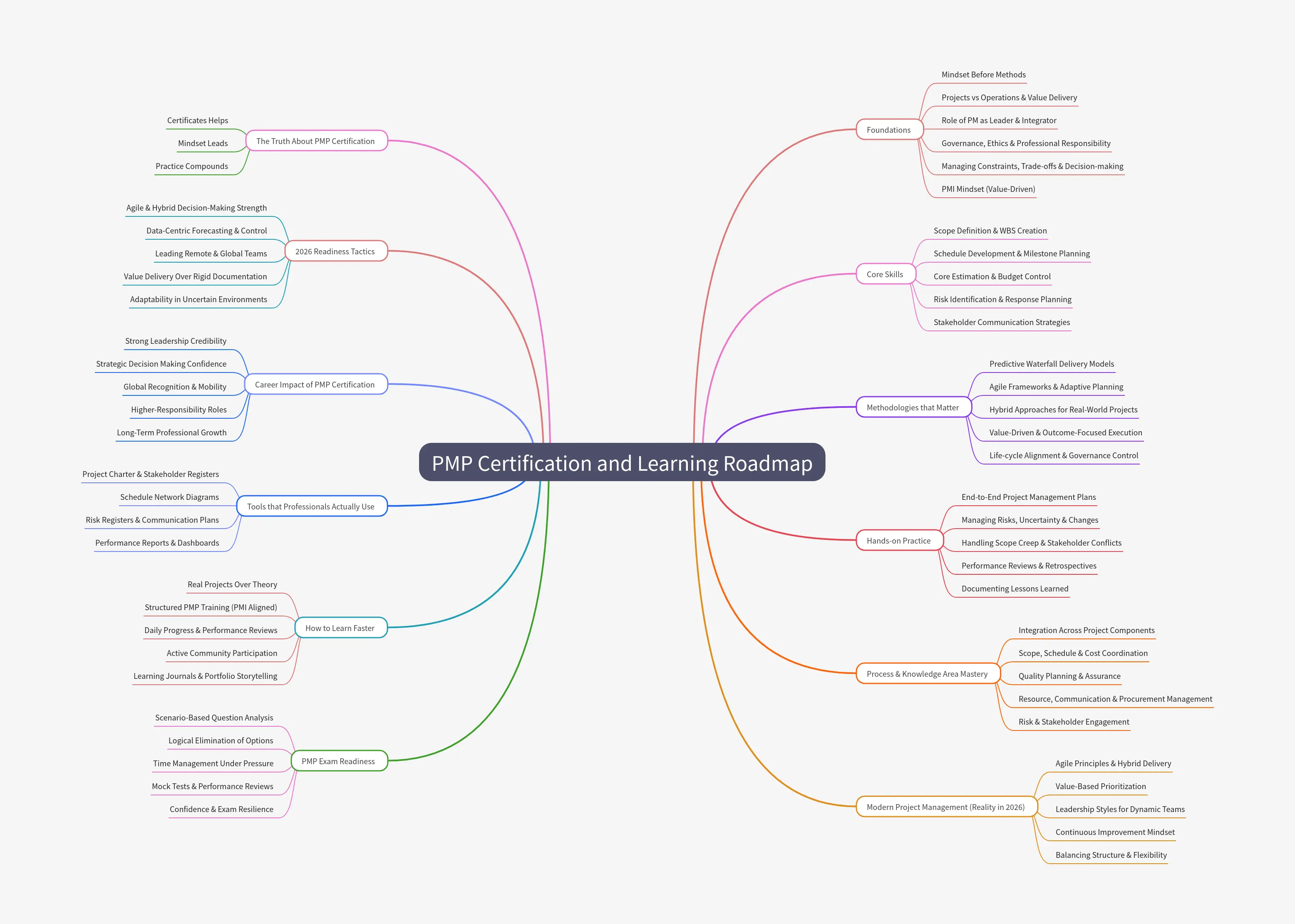
Before developing tools, templates, or timelines, you must first develop the appropriate mental model. As a matter of fact, this is the phase that introduces you to the language and logic of contemporary project management.
You begin to understand why projects exist and why value is delivered. That means it is not just activities that are performed.
Therefore, the core concepts you explore include
- Projects vs. operations and value streams
- Role of project manager as a leader and integrator
- Organized structures and governance
- Project constraints and tradeoffs
- Ethical responsibilities and professional conduct
It is factual that “a strong foundation supports a tall structure.” Meanwhile, this stage ensures that you don’t memorize concepts, but you internalize them.
Core Skills and Learning Workflows
Once the groundwork is laid, you have the option to move into developing skills. In fact, this stage is about how projects are planned, executed, and controlled in real-world environments. But at the same time, it is pivotal that you should begin learning in a structured flow that mirrors how projects actually unfold.
Here are the imperative skills developed at this stage:
- Scope definition and work breakdown structures
- Developing schedules and planning important project milestones
- Estimating costs and controlling budgets
- Risk identification and response strategies
- Stakeholder communication planning
Attaining Methodological Training
At this stage, you deepen your awareness by mastering project management methodologies and delivery approaches that shape how work is executed.
Precisely, acquiring a well-rounded training aids you move from what to do to how to do it effectively across different environments.
Methodologies and approaches you explore:
- Predictive waterfall project delivery
- Agile and iterative frameworks
- Hybrid models combining structure and flexibility
- Value-driven and outcome-oriented planning
- Governance and lifecycle alignment
This step gives you a structured lens through which all the decisions in the project management context are made. As the saying goes” Give a man a compass, and he will find his way through any forest.”
Guided and Independent Learning Projects
It holds true that the deepening of knowledge happens when theory is fused with practice. This stage is about application, where understanding turns into confidence. Here, you work through scenarios that challenge your judgment, logic, and, moreover, leadership instincts.
Practical learning experiments include:
- Developing full project management plans
- Identifying risks and managing uncertainty
- Handling scope changes in projects and dealing with stakeholder conflicts
- Performing performance reviews and retrospectives
- Documenting lessons learned
No doubt, “Practice makes you perfect.” This phase trains you to respond, not to react.
Process Groups and Knowledge Areas Mastery
At this stage, you begin to see the big picture. Projects are no longer a sequence of tasks but an interconnected system of processes.
With this you will procure a clear picture of all process groups and knowledge areas.
Areas of Structured Mastery
- Integration and alignment of project components
- Scope, schedule, and cost coordination
- Quality planning and also its assurance
- Resource and communication administering
- Risk, procurement, and stakeholder interaction
This is where you start thinking like a strategist, in the place of an executor. That means you anticipate outcomes instead of deadlines.
Modern Project Management Approaches
In the present project management context, projects demand flexibility. Definitely, this stage prepares you for predictive, agile, and also hybrid approaches, and it reflects how organizations operate today. This is a phase where you learn to balance structure with adaptability.
Contemporary learning focus:
- Agile principles and adaptive planning
- Hybrid delivery models
- Value-based prioritization
- Leadership styles for dynamic teams
- Continuous improvement thinking
It is crucial, as per the saying’ that when a river changes its course, the wise adjust their sails.
Hereby, you will learn not to resist changes but how to lead through them with a tactical mindset.
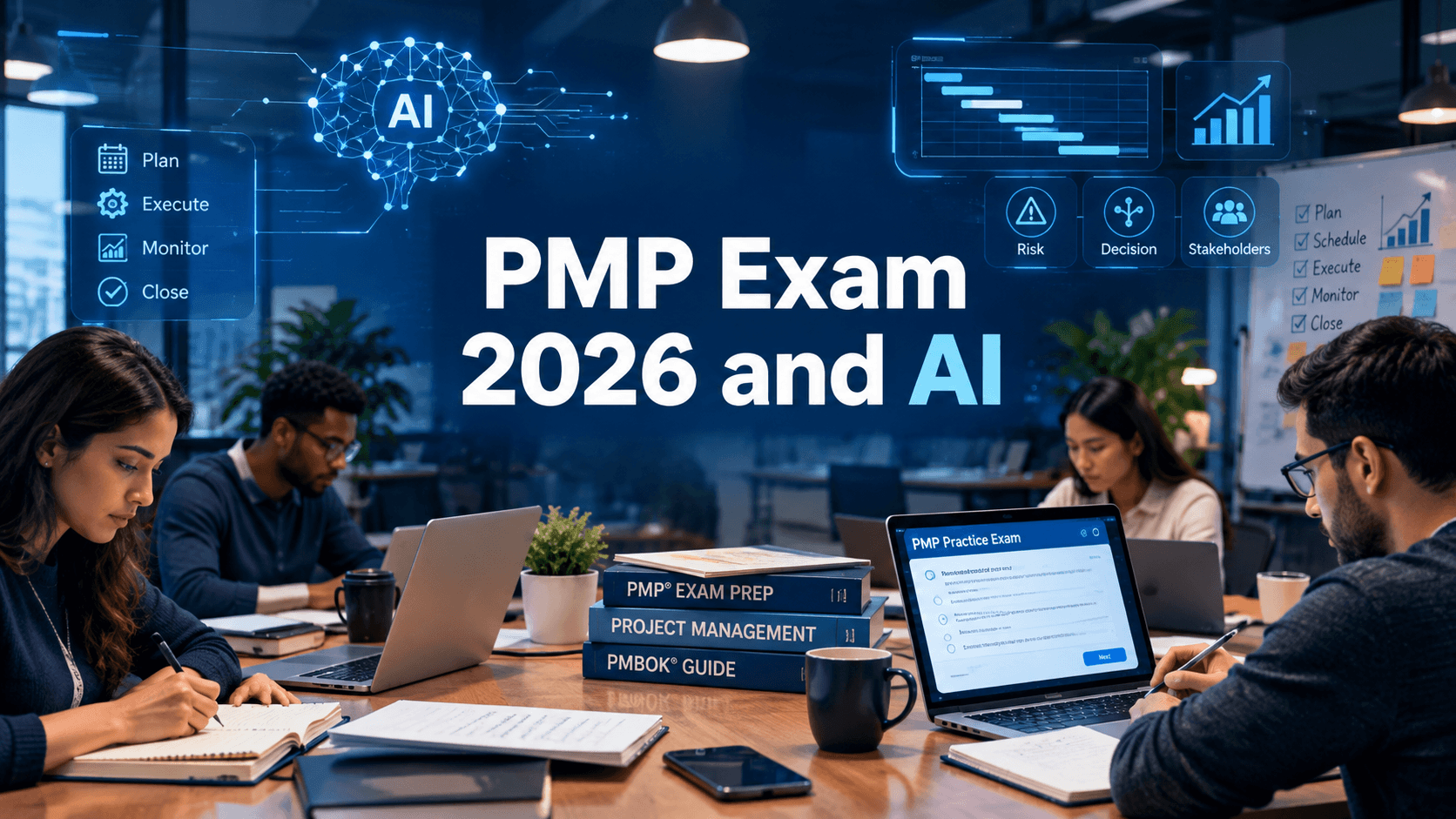
PMP Exam Preparation Strategy
PMP Exam connects dots between learning and certification. As a matter of fact, learning alone is not enough; it is important that one learn how to think like an exam. For this, a professional should definitely refine reasoning, timing, and decision-making approach.
Smart Preparation Techniques
- Scenario-based question analysis
- Eliminating misleading options logically
- Time management under exam conditions
- Practice tests and performance reviews
- Mental resilience and confidence building
This is a phase in one’s PMP journey that transforms efforts to efficiency.
Tools, Techniques, and Artifacts
A professional is defined by how well they use tools. It is not on how many tools they are aware of. Surely, this stage introduces you to essential artifacts that support clarity and control.
| Tool/Artifact | Purpose |
| Project Charter | Defines authority and direction |
| Schedule Network Diagram | Visualizes dependencies |
| Risk Register | Tracks uncertainties and responses |
| Communication Plan | Aligns stakeholders |
| Performance Reports | Supports informed decisions |
This is actually a phase of your learning progression that aids you to lead with precision instead of assumptions.
Career Growth and Professional Impact
It is visibly clear that learning can create leverage when it gets translated into opportunity. This stage focuses on how your skills shape your professional identity.
It aids you to move from being task-oriented to value-driven.
Career benefits include:
- Enhanced leadership credibility
- Improved decision-making confidence
- Global recognition in the professional area
- Higher responsibility roles
- Cross-industry career mobility
Earning PMP Certification by PMI signals that you are prepared to manage complexity with composure.
Continuous Learning and Professional Evolution
Evidently, certification is not a finish line, but it is a starting point of lifelong growth. That implies this stage reinforces the habit of continuous improvement. Here, it stays relevant by staying curious and reflective.
Ongoing learning practice
- Engaging with professional communities
- Reflecting through learning journals
- Tracking evolving best practices
- Mentoring and peer learning
- Applying feedback for growth
2026 Readiness Tactics
As project environments evolve, so must your approach. Preparing for 2026 means aligning your learning with emerging expectations and realities.
Key tactics to adopt:
- Strengthening agile and hybrid decision-making skills
- Leveraging data-driven insights for forecasting and control
- Enhancing leadership skills for remote and global teams
- Emphasizing value-driven delivery over documentation done rigidly
- Building adaptability to steer through uncertainties and changes
In 2026 and beyond, successful project professionals will not just follow plans. On the other hand, they will shape the outcomes.
Summary Table
| Road Map Stage | Primary Focus | Key Outcomes |
| Foundation | PM fundamentals and mindset | Concept clarity |
| Core Skills | Planning and control | Execution capability |
| Methodological Training | Predictive, agile, and hybrid | Structured decisions |
| Guided and Independent Practice | Real-world applications | Confidence |
| Process Mastery | Integrated PM processes | Strategic view |
| Modern Approaches | Flexibility and value | Adaptabilty |
| Exam Preparation | Scenario-based readiness | Exam success |
| Tools | PM artifacts and readiness | Precision |
| Career Impact | Leadership and credibility | Growth |
| Continuous Learning | Skill renewal | Long-term relevance |
| 2026 Readiness | Future-focused tactics | Sustained success |
Wrapping Up
This road map is your compass. It guides a professional on how to learn, practice, and thus grow. It is predominant to commit to PMP Certification through structured learning, methodological training, disciplined preparation, and, moreover, continuous reflection. Thus, you can prove that true mastery is achieved not in a moment but through purposeful learning over time. If you aspire to lead projects with confidence, there should be clarity, consistency, and the right guidance. This will definitely make a professional an impactful leader in project management landscape. Furthermore, this PMP Certification journey can aid a professional to adapt to evolving changes and create meaningful and long-term impact across industries and organizations, undoubtedly.
FAQs on PMP Course Roadmap
A PMP Certification is a globally admired credential that is solid proof of one’s project management knowledge together with skills and experience.
Project managers, team leads, and also any professional involved in managing projects can pursue it.
It involves structured learning, methodological training, exam preparation, and continuous professional development.
The PMP journey differs with people, and it takes a few months depending on one’s experience, study plan, and consistency.
Yes, in fact. It requires prior project management experience as defined by PMI criteria.
Yes, definitely. The PMP Certification journey covers predictive, Agile, and hybrid project management approaches.
Exam preparation is predominant as it covers scenario-based questions and tests decision-making skills.
A professional learns leadership, risk governance, stakeholder interactions, and strategic execution skills.
It advances a professional’s credibility in the industry and opens international career opportunities with increased salary potential.
Yes, continuous learning is essential to maintain the PMP Certification and also stay updated with the industry’s best practices,