A PMP Credential is an ideal bet for all the project managers across various professional fields including technology, constructions, telecom, commerce, finance, business processing units and many more. The PMP Certification adds more value to the persons profile and helps them to climb top ladders in any organization than of their non PMP Certified peers.
Jump ahead to
Benefits of PMP Certification
Below are the 5 benefits of PMP Certification which could help identify the value additions PMP gives.
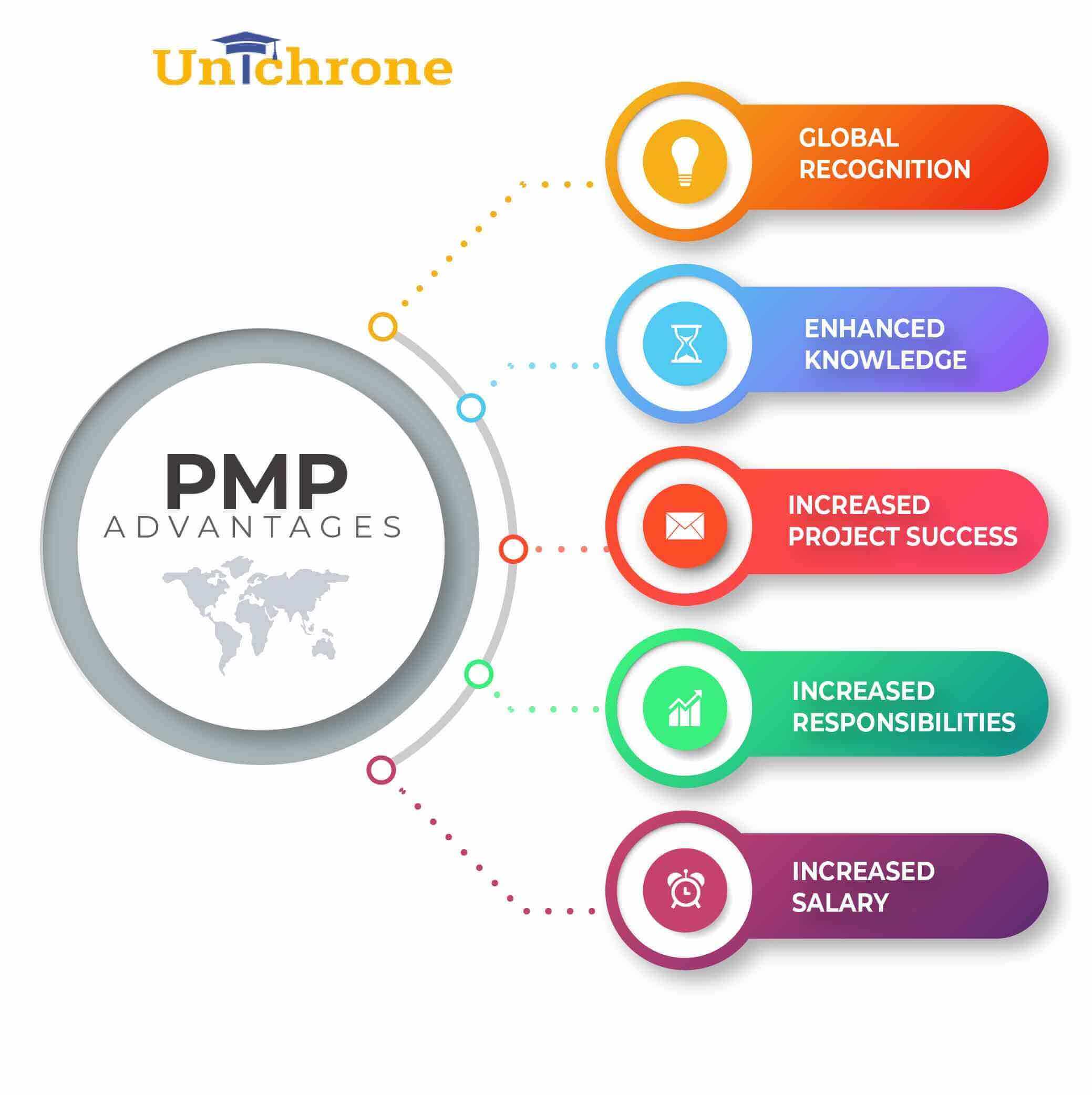
Global Recognition
PMP or the Project Management Professional Certification is the most prestigious professional credential in the world. This certification provided by the Project Management Institute (PMI) is recognized in every organization across all industries, globally. So with a PMP Certification, you will get hired in any organization at any location. Also, there are organizations that specifically ask for this certification in the resume during the hiring process. If being a project manager is your goal, then this valuable credential is your gateway to achieving it. This credential will help you advance your career in project management and get a promotion within your present organization as well.
Enhanced Knowledge
With a PMP Certification from the most widely regarded project management body in the world, aspiring project managers will be able to validate their project management knowledge. PMI has very high standards and is highly recognized in the industry. It allows only select candidates this reputed certification as it strives for excellence in the certified PMPs. This certification proves that the individual is extremely knowledgeable in the 10 knowledge areas of project management as depicted in the PMBOK Guide. It also measures a professional’s skills in implementing tools and techniques used in achieving successful project delivery.
Increased Project Success
This valuable credential from PMI will help project managers drive the project management process of their organization. Using the PMP Certification, project managers can lead projects for their organization and successfully ensure project delivery. Along with a detailed comprehension of project management concepts, a project manager has effective leadership and communication skills that help them make informed decisions for the projects they manage. They can communicate with the stakeholders of the project and lead the project management team to execute the tasks assigned to them in order to ensure the end product meets customers’ satisfaction.
Increased Responsibilities
A PMP Certification from PMI demonstrates your dedication to your goal of becoming a certified project manager and helps organizations you work in or get hired in recognizing that as well. A certified project manager has many responsibilities including risk and financial assessments. They can plan and execute the project from start to finish, and monitor all activities involved in the project development process. Through their extensive knowledge of the project management methodology, they can lead and manage projects for their organizations efficiently. They are capable of handling several roles and responsibilities during the course of the project management cycle.
Increased Salary
PMPs are the most handsomely paid professionals in the industry. A recent survey has shown data that project managers with the PMP Certification earn 20% higher than their non-certified counterparts. This makes this certification the most sought-after professional credential, globally. Several professionals from diverse industrial sectors from manufacturing to IT, from services to government require project managers to lead and manage projects for their organizations. These project management jobs are predicted to grow further in the coming years with more than 2 million new project managers’ roles to be generated and filled around the world by 2027.
Is PMP Certification Worth It
Therefore, it can be observed from the above-mentioned benefits of PMP Certification that earning this certification will be the best thing a professional can do to move their career in the right direction. PMP Certification advantages are numerous and will not go away after a few years. By maintaining this professional credential, project managers will remain updated with the latest trends and best practices in the project management industry. They will get global recognition and earn better than their peers. Earning this most valuable certification will transform their lives.
Earning a PMP certification can be a good investment for your future. As a PMP Certified Project Manager, you will gain recognition in the project management industry and become respected as a knowledgeable and proficient professional. PMI has excellent networking of PMPs which allows the exchange of knowledge and ideas about the dynamic world of project management. Thus, investing in a credential of this reputation is always a good idea, especially for those who want to future-proof their careers.
So, to answer the question – Is PMP worth it? Yes, it is. This is evident from the recent salary data given on salary.com that PMPs in the US can earn between $69,069 to $235,748 on average per year. These numbers differ according to the knowledge and skill levels of the PMP and several other factors like location, position, etc. A recent PMI report also states that PMP jobs were the most sought-after during the COVID-19 pandemic. This further proves that PMPs are the most in-demand professionals in the world right now. Aspiring, as well as existing PMPs, can register for the PMP Certification Training Course to improve their project management knowledge and skills. This will not only help them future-proof their careers but also make them the most distinguished professionals in the industry.
Summary:
PMP Certification equips professionals with a thorough understanding of project management concepts, procedures, and globally accepted best practices. It improves the capacity to effectively manage risks, resources, and stakeholder expectations during project planning, execution, and closure. Credibility gained by certified project managers frequently results in improved job prospects, leadership positions, and increased pay. Additionally, the credential aids professionals in applying consistent methodologies and standardizing procedures that raise project success rates. PMP-certified individuals are valued by organizations for their ability to manage challenging projects and consistently deliver results. The PMP Certification Training Course can help those who want to enhance these abilities and gain practical, real-world knowledge.
FAQs on Key Benefits of PMP Certification:
1. What are the benefits of getting PMP certification?
PMP certification enhances project management skills and helps you handle projects more efficiently. It also strengthens your professional credibility in any industry.
2. How does PMP help in leading teams effectively?
It equips you with strategies for guiding teams, managing conflicts, and motivating members. This ensures projects run smoothly with better collaboration.
3. Can PMP certification increase earning potential?
Yes, certified professionals are often valued higher and may receive better compensation. The credential signals verified expertise in project management.
4. How does PMP contribute to career growth?
It opens opportunities for leadership roles and promotions. Employers recognize the structured approach and discipline that PMP-certified professionals bring.
5. Is PMP certification recognized globally?
Yes, it is accepted across industries and countries. This makes it useful for professionals seeking international opportunities or switching sectors.
6. How does PMP improve project planning and execution?
It teaches structured techniques for scheduling, monitoring, and controlling projects. This reduces errors, saves time, and ensures goals are met efficiently.
7. Does PMP help in risk management?
Absolutely, PMP provides methods to identify, assess, and mitigate risks before they affect a project. This helps teams respond proactively to challenges.
8. What are the four key values of PMP?
The values focus on professionalism, accountability, continuous learning, and ethical practice. They guide decision-making and project management behavior.
9. What is the rule of 7 in PMP?
The rule of 7 emphasizes keeping teams, tasks, or information chunks manageable for better focus and efficiency. It helps avoid overloading project members.
10. Is PMP useful for non-technical industries?
Yes, PMP principles apply wherever structured planning and execution are needed. Industries like healthcare, finance, or construction also benefit from its practices.
11. How does PMP certification enhance stakeholder communication?
It teaches techniques to engage stakeholders effectively, share updates clearly, and manage expectations. This ensures alignment throughout the project lifecycle.
12. Can PMP certification benefit both beginners and experienced professionals?
Yes, it provides a foundation for newcomers and adds credibility for experienced managers. The structured approach helps improve performance at any career stage.